
Gland-Preserving Treatment of Sialolithiasis
Sialolithiasis is not a life sentence. Even if the stone is large, that doesn’t mean the gland has to be removed. The same is true if inflammation keeps returning or previous treatment hasn’t helped. Gland-preserving treatment removes the stone and restores saliva outflow while leaving the gland in place.
- The stone is removed, and the gland keeps working
- Gland-preserving treatment works for recurring stones and after unsuccessful surgeries
- Professor Abdusalamov’s experience: over 30 years and more than 2,000 surgeries
Structure of the salivary glands and treatment of sialolithiasis

What Gland-Preserving Treatment Is
Gland-preserving treatment is an approach in which the doctor removes the cause of the problem. Here, the cause is the stone and the blocked flow of saliva. The salivary gland itself stays intact and continues to function normally.
In the past, the entire gland was often removed for salivary stones. This happened especially if the stone was large or inflammation kept recurring. Today, however, this is unnecessary in most cases. Modern techniques allow the stone to be removed without taking out the gland.
Which gland-preserving treatment is suitable depends on the stone’s size and location. It also depends on the condition of the duct and the gland itself. So the doctor determines this from the examination results.
This approach is fundamentally different from gland removal. Removal takes out the organ. In contrast, gland-preserving treatment removes only what’s disrupting its function. So after treatment, a person keeps their own gland instead of living without one.
Sialolithiasis Is Not a Life Sentence
A diagnosis of “sialolithiasis” often causes alarm. Patients hear that the stones will keep coming back. They are also told the gland will have to be removed. However, this isn’t so in practice. The condition is treatable, and in most cases the gland can be preserved.
A common misconception is that, with stones, the gland will be lost anyway. In reality, a stone is a mechanical obstruction that can be removed. The sooner the stone is found and outflow is restored, the better the gland’s condition. So it’s not worth putting off seeing a doctor.
Recurring flare-ups and unsuccessful treatment attempts in the past are also alarming. But neither means there’s no way forward. Often the cause of recurring stones isn’t the gland itself. Instead, it’s a narrowed duct or a stone that wasn’t fully removed. Both of these can be corrected.
What’s important to know:
- a stone can be removed without removing the gland
- recurring flare-ups don’t mean the gland is lost
- scarring or narrowing (stricture) of the duct can, in a number of cases, be corrected
- removing the gland is only ever considered as a last resort
The key is an accurate, timely diagnosis and the right technique for you. How the examination is carried out is described on the page “Diagnostics”.
Why It’s Important to Preserve the Gland
Saliva isn’t just moisture in the mouth. For example, it moistens the mucous membrane and helps with chewing and swallowing. It also helps start digestion and protects teeth from decay. Each gland makes its own contribution, so losing one doesn’t go unnoticed.
Every remaining gland becomes especially valuable if the other one has already been removed. The same applies if its function is impaired. The remaining glands then have a harder time keeping up with the workload.
If the gland is preserved:
- there’s enough saliva, and no persistent dry mouth develops
- the teeth and mucous membrane stay protected
- chewing and swallowing remain just as easy
- there’s no neck incision and no scar like the one left after gland removal
Removing the gland is also irreversible — it can’t be brought back. That’s why the doctor first considers every way to preserve the gland. Removal is discussed only once those options are exhausted.
How Gland-Preserving Treatment Is Performed
The procedure is done on an outpatient basis, under local anesthesia. It usually takes 20 to 40 minutes. For a general overview of salivary gland disorders, see the American Family Physician review.
Sialendoscopy
A thin endoscope is inserted into the duct. The doctor sees the stone and can remove it without incisions.
Removal Through the Duct
The stone is extracted through the duct’s natural opening, without facial or neck incisions.
Intraoral Removal
A small incision in the mucous membrane lets the doctor retrieve a deeper stone.
Duct Opening Reconstruction
Restores a wide duct opening if it has been narrowed by scarring.
Large Stones
For large stones, an individual approach is chosen to preserve the gland.
Complex Cases Require Specialized Experience
In our practice, we regularly see patients who were already treated elsewhere for salivary stones. Even with modern equipment and a stated specialization, a case’s complexity isn’t always assessed correctly. As a result, the optimal approach isn’t always chosen.
Following earlier procedures, some patients come to us with consequences: duct damage or narrowing, recurring stones, chronic inflammation, impaired saliva outflow, adhesions, and scarring. As a result, additional treatment is sometimes needed to restore normal gland function.
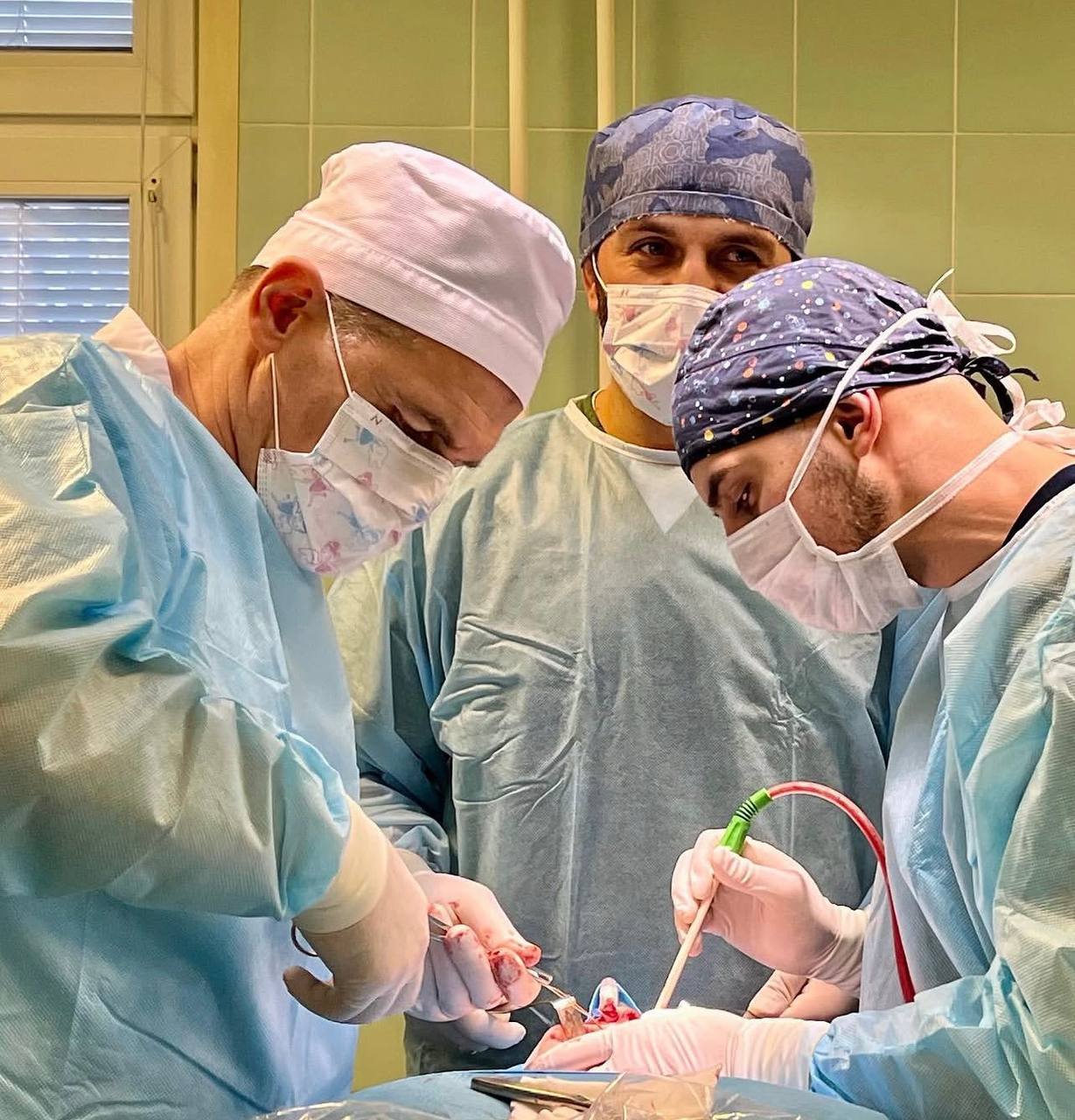
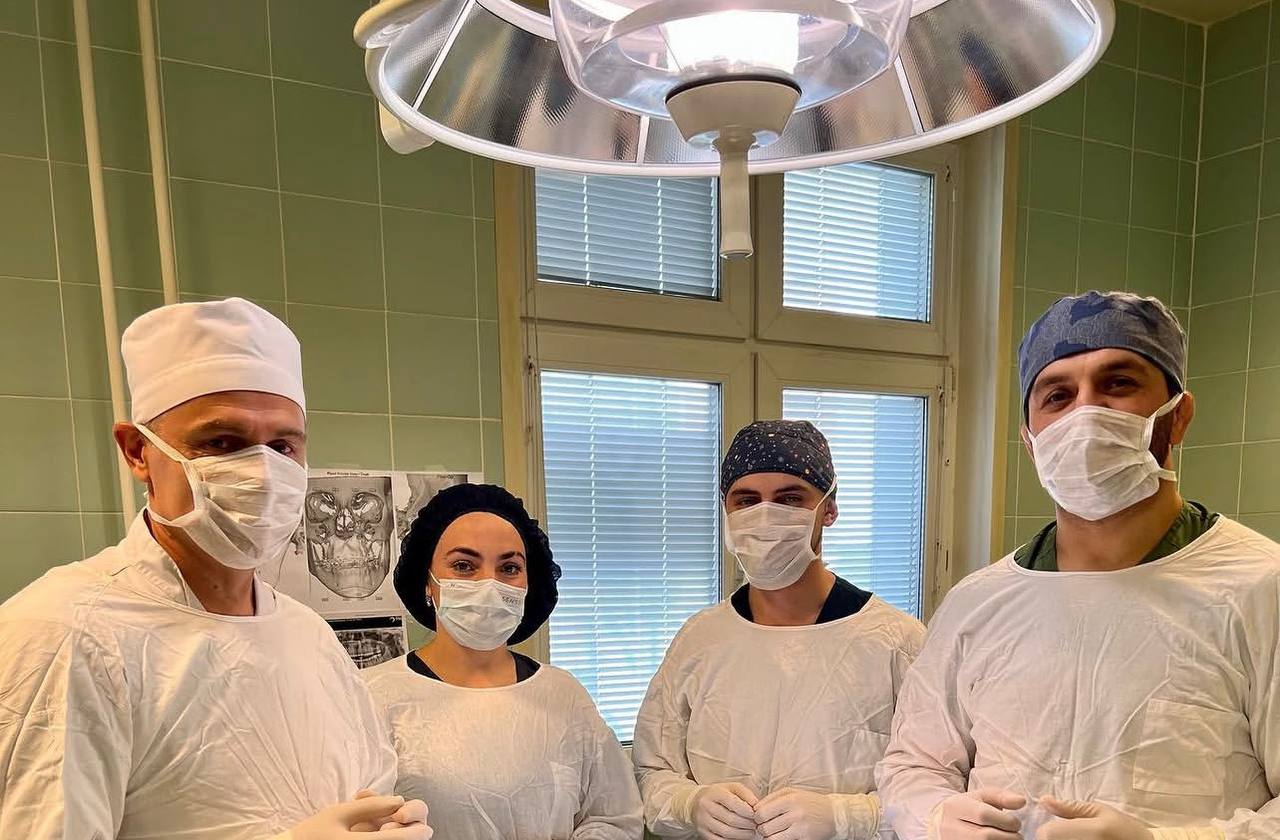
We don’t claim to be the “best” clinic. Instead, our goal is to do our work as professionally as possible. For more than 30 years, Professor Magomed Rasulovich Abdusalamov, a maxillofacial surgeon, has specialized in salivary gland diseases. Over that time, he has performed more than 2,000 surgeries.
For Professor Abdusalamov, a complex case is not an immediate reason to remove the gland. Above all, it’s a chance to preserve the gland and restore its function.
Professor Magomed Rasulovich Abdusalamov
Correcting the Consequences of Previous Procedures
Many patients have already been operated on at other clinics, including abroad. If they weren’t satisfied with the result, they often turn to Professor Abdusalamov. Surgery doesn’t always solve the problem: sometimes new difficulties appear afterward. Patients most often arrive with these consequences:
- duct damage or narrowing
- scarring and adhesions at the surgical site
- stones that have formed again
- chronic inflammation of the gland
- impaired saliva outflow
- stone fragments left behind after surgery
A repeat procedure calls for particular care. The tissue has changed after previous surgeries. The duct’s course may be distorted, and scarring makes access more difficult. That’s why such cases begin with a thorough examination and a review of past treatment.
We don’t evaluate other doctors’ work or dwell on why things turned out that way. Instead, we focus on finding the cause of the current symptoms. We also try to understand whether the gland’s function can be restored. Even after an unsuccessful surgery, there’s often still a chance to preserve the gland.
Sometimes patients have already been told the gland will have to be removed. Therefore, such a conclusion is worth double-checking: there may be a way to avoid removal.
How the Choice Is Made: Preserve or Remove
The decision isn’t made “by eye,” but based on examination results. First, the doctor determines the cause of the symptoms. This means checking where the stone is located and how many there are. It also means checking what the duct looks like and the condition of the gland tissue. The main method here is sialography; more on it on the page “Sialography”.
What the choice of technique depends on:
- stone size and position
- number of stones
- duct patency and condition
- how long the inflammation has lasted and how severe it is
- condition of the gland’s own tissue
If the stone is large, that doesn’t automatically mean the gland will be removed. Size affects the choice of technique, but on its own it isn’t a verdict. Dedicated, gentler approaches exist for large stones too.
If the gland can be preserved, the doctor chooses a gentler technique. By contrast, removing the gland is considered only as a last resort. This applies when its tissue has been irreversibly changed and nothing else helps. The doctor explains such a decision by showing the examination results.
According to the clinic’s data, the gland is preserved in 99% of cases. Professor Abdusalamov also holds 3 patents and has more than 100 publications.
How Treatment Proceeds
The procedure is done on an outpatient basis, under local anesthesia. It usually takes 20 to 40 minutes.
Consultation
The doctor listens to your symptoms and reviews previous reports and details of any surgeries.
Examination
Sialography, ultrasound, or other tests show the stone and the duct’s condition.
Choosing a Technique
A method is selected that removes the stone and preserves the gland.
Procedure
The chosen procedure is performed, with the type of anesthesia determined individually.
Follow-Up
Follow-up checkups confirm that saliva outflow has been restored.
What Happens After Treatment
Recovery time after gland-preserving treatment depends on the technique. So the doctor gives a timeframe once it’s chosen. In any case, follow-up monitoring after treatment is important. The doctor checks that saliva flows freely and that the duct stays open.
After treatment, the doctor usually recommends:
- attending follow-up checkups at the scheduled times
- following fluid intake and dietary recommendations
- reporting any swelling or pain in the gland area to the doctor
- not skipping checkups, even if there are no symptoms
Thus, regular monitoring helps catch a duct narrowing or a new stone early. At that point, the problem is still minor.
When It’s Worth Booking a Consultation
See a doctor if:
- you’ve been advised gland removal and want to know if it can be preserved
- pain, swelling, or duct narrowing remains after surgery for a stone
- stones keep forming again
- gland inflammation keeps coming back
- the stone is large, and other doctors haven’t been willing to remove it
Bring any previous reports, scans, and records with you. As a result, the doctor can understand more quickly what’s already been done.
Key Points on Gland-Preserving Treatment
- sialolithiasis is not a life sentence: the gland is preserved in most cases
- the gland produces saliva, so removing it is a last resort
- gland-preserving treatment is chosen after an examination, primarily sialography
- even after unsuccessful surgery, a chance to preserve the gland often remains
- Professor Abdusalamov has over 30 years of experience and more than 2,000 surgeries
- follow-up checkups are needed after treatment
Frequently Asked Questions
About Gland-Preserving Treatment
In most cases, yes. The doctor removes the stone and restores saliva outflow. The gland stays in place and keeps working.
Not always. If the gland’s tissue has been irreversibly changed, the doctor may suggest removal. But such a decision is made after an examination, not in advance.
Find out which tests support that conclusion, and get a second opinion. Bring your reports and scans. A specialist will assess whether the gland can still be preserved.
This is determined by the examination results. The doctor assesses the condition of the gland tissue and duct. You can’t determine this on your own. So don’t decide on removal without the full picture.
About Stones and Previous Surgeries
Recurrence is possible, especially if the underlying cause remains, for example a narrowed duct. That’s why follow-up checkups matter: they help catch a problem early.
Often, yes. If the duct is narrowed, there’s scarring, or stones remain, the doctor assesses the situation. Then the doctor selects a way to restore saliva outflow. The options depend on exactly what happened.
If the stones are easily accessible, the doctor removes them all at once when possible. This depends on the number, size, and position of the stones. So it’s determined after an examination.
Massage and fluids can ease symptoms with small stones, but they don’t replace treatment. If the stone is large or stuck in the duct, a doctor’s help is needed.
About the Procedure and Recovery
Many gland-preserving techniques are performed through the duct or the mouth. They leave no incisions on the face or neck. The exact approach depends on the stone’s size and location.
The doctor selects the type of anesthesia individually. There’s no pain during the procedure, and moderate discomfort is possible afterward.
This depends on the technique used and the gland’s condition. The doctor gives a timeframe after the examination and choice of approach.
Want to Preserve Your Salivary Gland?
Book a consultation. Professor Abdusalamov will review your tests and previous reports. He will also advise whether the gland can be preserved in your case.