
Stone Under the Tongue
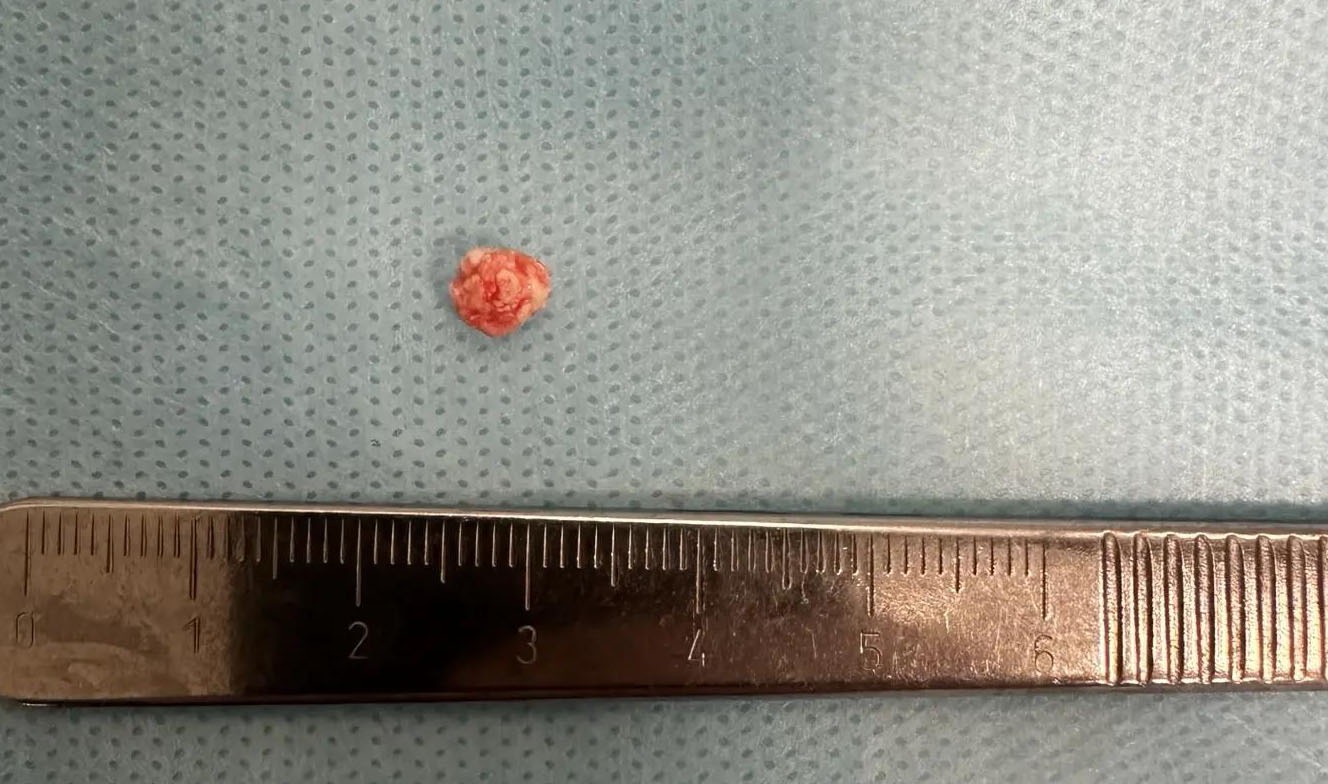
A stone under the tongue is a common name for a salivary stone (sialolith). It comes to rest right at the outlet of a salivary gland duct. This is in the floor of the mouth, near the base of the tongue. It isn’t a separate condition. Instead, it is simply one possible location for a stone in sialolithiasis.
- Most often this is a stone in the submandibular gland duct
- A doctor determines the exact location during examination
What Is Meant by “Stone Under the Tongue”
Saliva from the submandibular gland reaches the mouth through a duct. It runs forward and ends in a small opening in the floor of the mouth. In addition, this opening is at the base of the tongue’s frenulum. Sometimes a stone in this duct reaches almost to that opening. Therefore, it’s called a “stone under the tongue.”
Strictly speaking, this isn’t a separate disease of the sublingual area. Instead, it is a specific case of sialolithiasis. It is the same sialolith. However, it stopped at the duct’s outlet rather than deeper, closer to the gland.
The sublingual gland has several small ducts of its own in the same area. It can occasionally be involved as well. However, stones form in it far less often than in the submandibular gland’s duct.
Read what a stone is made of and how it grows in Causes of Sialolithiasis.
How a Stone Under the Tongue Presents
The stone is very close to the duct’s outlet. Because of this, symptoms here feel different than with a stone deeper in the gland.
Sensation of a Foreign Body
A firm lump can be felt under the tongue, as if something blocks the way.
Fullness While Eating
Tension and mild pain build up in the floor of the mouth while eating.
Pain When Moving the Tongue
Talking, chewing, and tongue movements can trigger pain in this area.
Swelling of the Floor of the Mouth
The tissue under the tongue looks more swollen than usual on one side.
Reduced Saliva Flow
Saliva flows more weakly or unevenly from the duct on the affected side.
A Visible Bump at the Duct Opening
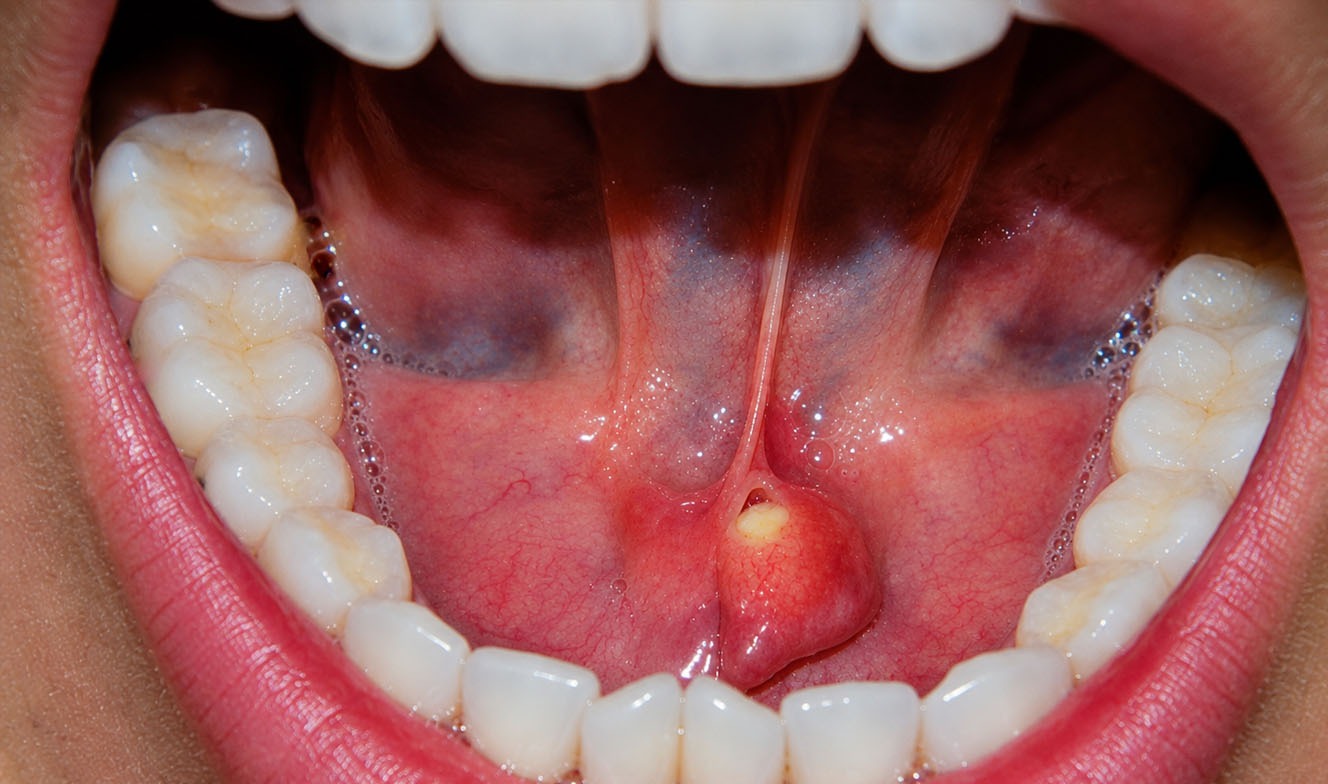
Sometimes the stone is visible as a pale lump right at the duct’s opening.
Why the Stone Gets Stuck Here
The submandibular gland’s duct is roughly the same width along its length. However, it narrows slightly right at the point where it opens into the mouth. A stone may form or shift deeper in the duct. The flow of saliva carries it forward. As a result, it can become lodged exactly at this narrower section.
The closer the stone is to the outlet, the easier it usually is to spot. As a result, it can be found on examination or by touch. In contrast, a stone deep in the duct or the gland is harder to find.
The page Causes of Sialolithiasis also covers the general mechanism and stages of stone growth.
How This Differs From a Stone in Other Glands
Symptoms depend a great deal on where the stone is located. So does how easily the stone can be spotted.
Stone Under the Tongue
Right at the duct’s outlet. It is often felt or even visible on examination, so symptoms are distinct.
Stone in the Submandibular Gland
Deeper in the duct or in the gland itself. Pain and swelling appear under the jaw, so the stone is harder to feel.
Stone in the Parotid Gland
Swelling and pain occur in the cheek in front of the ear. This is less common. The duct here also has a different shape.
How It Is Confirmed
The stone is located at the duct’s outlet. Because of this, it can often be found on examination alone, without complex testing.
- Examination of the floor of the mouth and palpation of the duct
- Gentle pressure along the duct to check how saliva flows
- Duct probing, if needed
- Salivary gland sialography, if the stone isn’t clearly visible or palpable
Also, the doctor chooses the method and scope of testing based on the examination findings.
When You Should See a Doctor
It’s worth booking a consultation as soon as discomfort under the tongue first appears. This is especially true if it keeps recurring.
- discomfort or pain under the tongue doesn’t go away;
- swelling or a firm lump is noticeable under the tongue;
- redness or pus-like discharge appears from the duct;
- it becomes hard to move the tongue, chew, or swallow.
However, if swelling of the floor of the mouth increases rapidly, seek emergency medical care. Do the same if you develop a high fever or have trouble swallowing or breathing.
Frequently Asked Questions
No. It’s the same salivary stone seen in ordinary sialolithiasis. It is simply located right at the point where the duct opens into the mouth.
Most often from the submandibular gland’s duct. However, the sublingual gland’s own ducts are affected far less often.
Sometimes, yes, if it’s located close to the duct’s outlet. But only a doctor can determine its exact size and position. This takes an examination and, if needed, an ultrasound.
You shouldn’t try to move or remove the stone yourself. This can damage the duct or push the stone deeper. Instead, you need a doctor’s examination.
By itself, it’s no more dangerous than a stone anywhere else in the duct. However, if the duct becomes completely blocked, inflammation can set in. Then more urgent care is needed.
The sensations can be similar, but these are different conditions. So an examination and ultrasound or other methods are used to tell them apart.
Its location at the duct’s outlet sometimes allows less invasive removal than a deeper stone. However, the doctor determines the treatment approach individually.
Related Topics
Feeling a Lump or Discomfort Under the Tongue?
Book a consultation. The doctor will examine the floor of your mouth. The doctor will also determine the exact location of the stone. Finally, the doctor will explain what options are available in your case.