
Home / Sialolithiasis / Stone Removal / Transoral Surgical Removal
Transoral Surgical Removal of a Large Salivary Stone
Sometimes a stone in the duct or on the floor of the mouth grows large. As a result, it can’t always be removed through the duct or with sialendoscopy. In that case, surgeons use transoral surgical removal of the salivary stone. They reach the stone through the oral mucosa. So the skin of the face and neck is not cut. The procedure is done under local anesthesia on an outpatient basis.
- Access through the oral mucosa, with no external incisions
- Local anesthesia, performed on an outpatient basis
- Used for large stones in the anterior and middle part of the duct
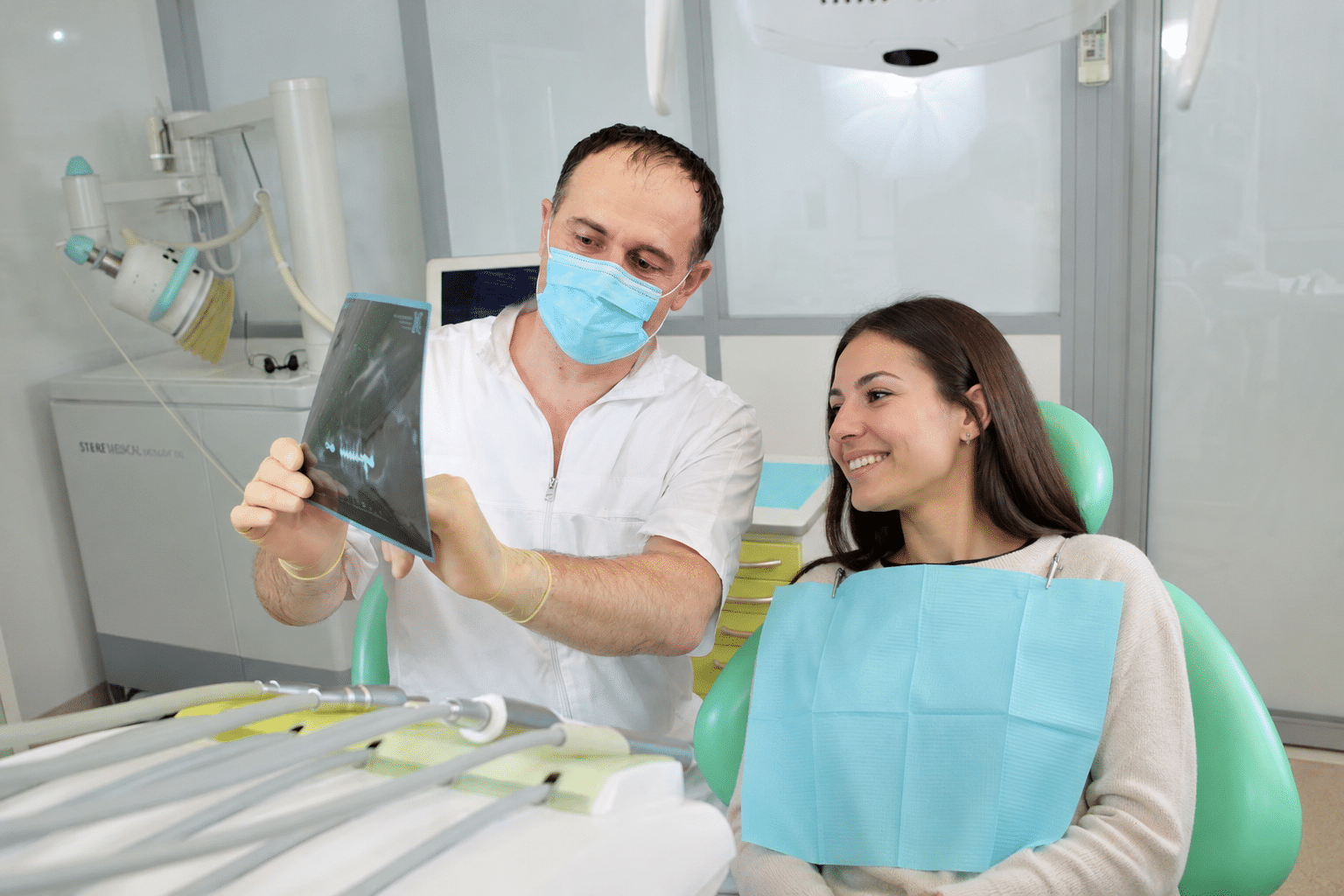
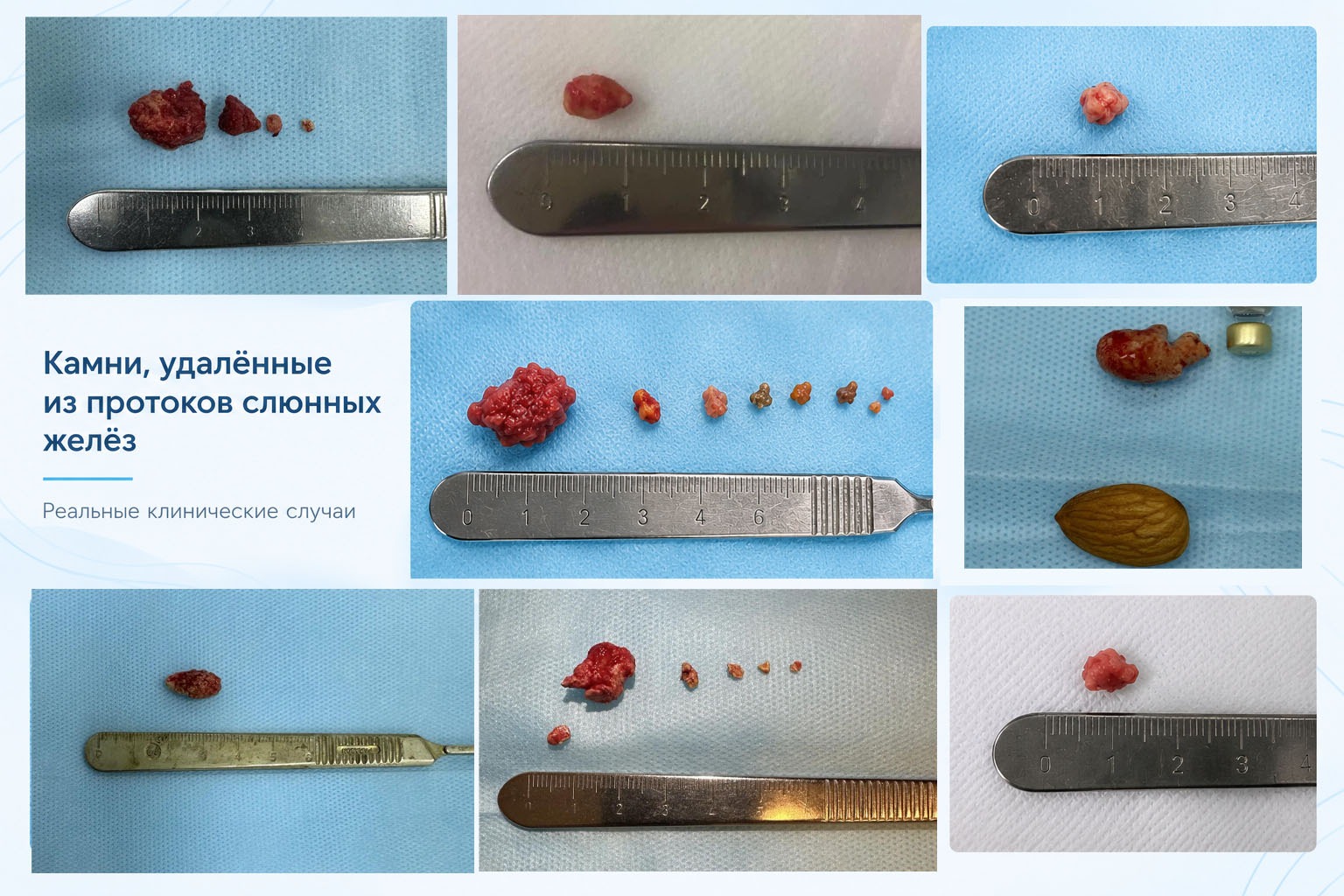
When Transoral Surgical Removal of a Salivary Stone Is Indicated
Transoral surgical removal is considered when a stone is too large to pass through the duct. It also applies when sialendoscopy can’t clear the stone completely. The same is true for removal through the duct opening. Most often, these are stones in the anterior and middle part of the submandibular duct. Stones near the surface of the floor of the mouth also qualify.
This method is also used when a stone causes repeated flare-ups. These include pain and swelling during meals and duct inflammation. It is chosen when gentler methods haven’t worked.
This differs from simple removal through the duct opening. There, the stone sits right at the opening. It can be removed without cutting the mucosa. With transoral surgical removal, the stone lies deeper. Therefore, the surgeon has to incise the mucosa above it to reach the duct.
What Workup Is Needed Before Surgery
Before the procedure, the doctor needs three facts about the stone. These are its exact position, its size, and its depth relative to the duct.
- examination and palpation of the floor of the mouth and duct
- sialography — clarifies the stone’s position and size within the duct
- ultrasound of the salivary gland and duct
- CT — for deeply located stones or an unclear picture
If there is acute inflammation at the visit, surgery is usually postponed. First, the doctor treats the inflammation until it settles down. After that, the stone is removed.
How Transoral Surgical Removal of a Salivary Stone Is Performed
The procedure is performed on an outpatient basis. The patient goes home the same day. It usually takes 20 to 40 minutes.
Pain Relief
Local anesthesia around the duct and floor of the mouth.
Positioning and Marking
Locating the stone by palpation and diagnostic findings.
Mucosal Incision
The incision runs along the duct above the stone, so the lumen stays open.
Stone Removal
The stone is removed whole. If it has fused to the duct wall, it comes out in pieces.
Creating Drainage
The wound is often left partly open so saliva can drain out.
Surgical Technique Details
The surgeon makes the incision along the duct, not across it. As a result, the lumen doesn’t narrow after healing. After the stone is removed, the wound is usually left partly open. This lets saliva drain freely instead of collecting in the tissue. The technique is called creating a new duct opening. It lowers the risk of the duct narrowing again.
Sometimes a stone is large and firmly fused to the duct walls. In that case, it may be broken up in place first. The fragments are then removed. This doesn’t change the access, because the surgery is still done through the mouth. However, the procedure may take a little longer.
Local Anesthesia During Surgery
Transoral access usually doesn’t require general anesthesia. Local anesthesia is enough to fully numb the duct and the floor of the mouth. The numbness lasts for the whole procedure. The anesthetic is injected into the mucosa around the incision site. It takes effect within a few minutes.
The patient stays conscious during the operation. They can talk with the doctor and feel no pain. However, they may notice the touch and pressure of the instruments. This is normal with local anesthesia. After the anesthetic wears off, mild numbness remains in the wound area for a while. It goes away on its own.
General anesthesia is rarely used for this type of procedure. For example, it may be considered for significant patient anxiety or coexisting medical conditions. It may also be used when the surgery is combined with another procedure. The type of anesthesia is discussed individually at the consultation.
If the Stone Is Very Large or Has Fused to the Duct
A particular challenge arises when a stone is firmly fused to the duct wall. The same is true when it fills almost the whole lumen over a long stretch. In such cases, the doctor discusses fragmenting the stone with the patient beforehand.
Sometimes a large stone is first broken up with lithotripsy. The fragments are then removed through the same transoral approach. As a result, even a large stone can be removed without an external incision.
If the stone lies deep within the gland itself, transoral access may not be enough. In that case, other surgical methods are considered. Several stones can often be removed at once. This applies when they lie close together in an accessible part of the duct.
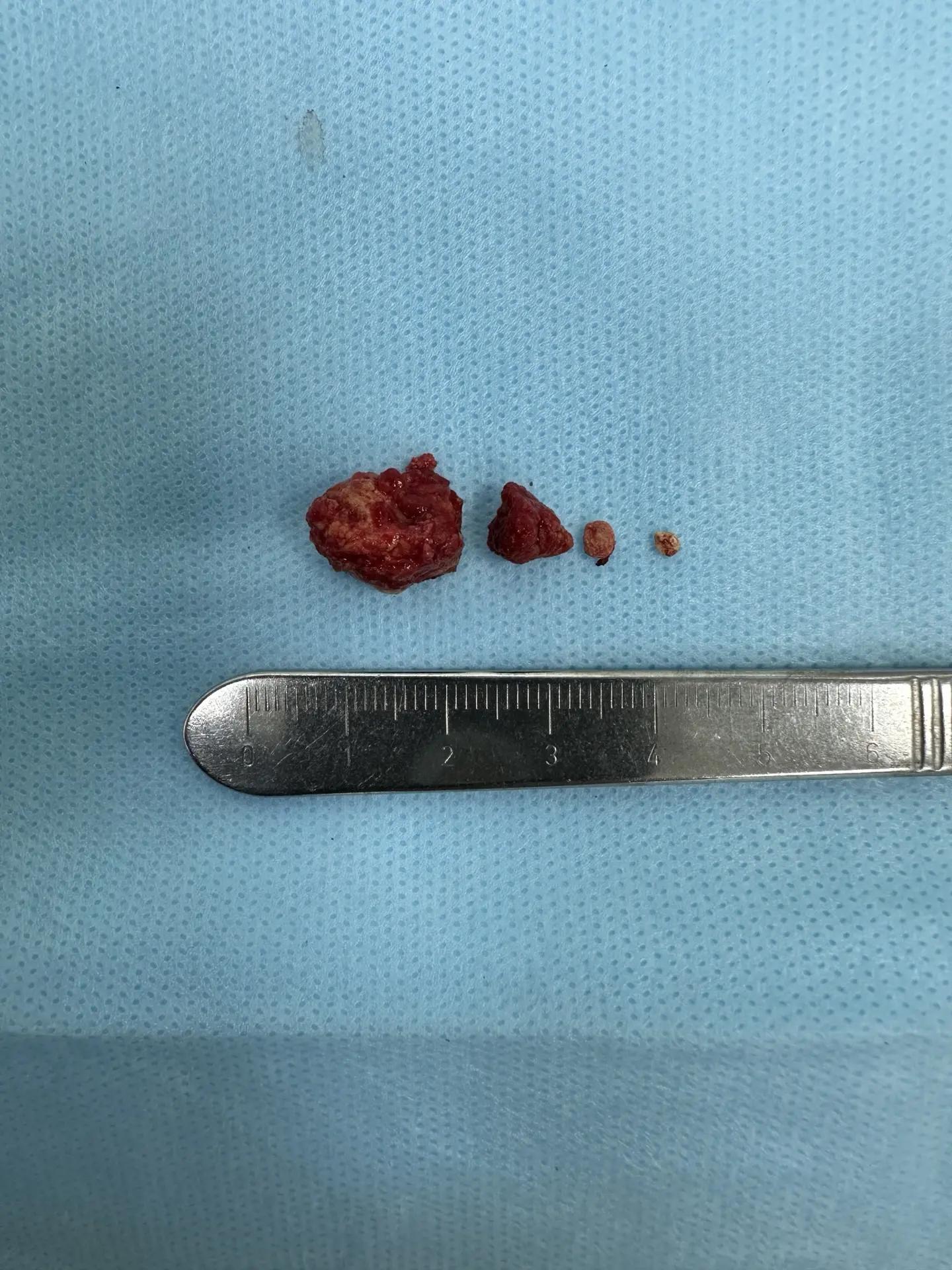
A Large Stone After Removal
How Transoral Surgical Removal of a Salivary Stone Differs from Other Options
For small stones right at the duct opening, simple removal is usually enough. The surgeon does not need to cut the mucosa. Sialendoscopy removes a stone from the duct under visual control. It uses a thin instrument and requires no incisions. However, it doesn’t suit every stone size or position.
Transoral surgical removal is used when the stone is larger or sits deeper. It is also used when gentler methods don’t work. The stone must still be accessible through the mouth. If the stone is embedded in the gland tissue, more complex surgery may be needed. The same applies if the duct is severely altered. In some cases, an external approach is required.
This method thus occupies a middle ground. It sits between gentler intraductal techniques and surgery through an external incision. It can remove a larger stone than sialendoscopy can. At the same time, it preserves the gland and avoids a skin incision.
The Practice of Magomed Rasulovich Abdusalamov
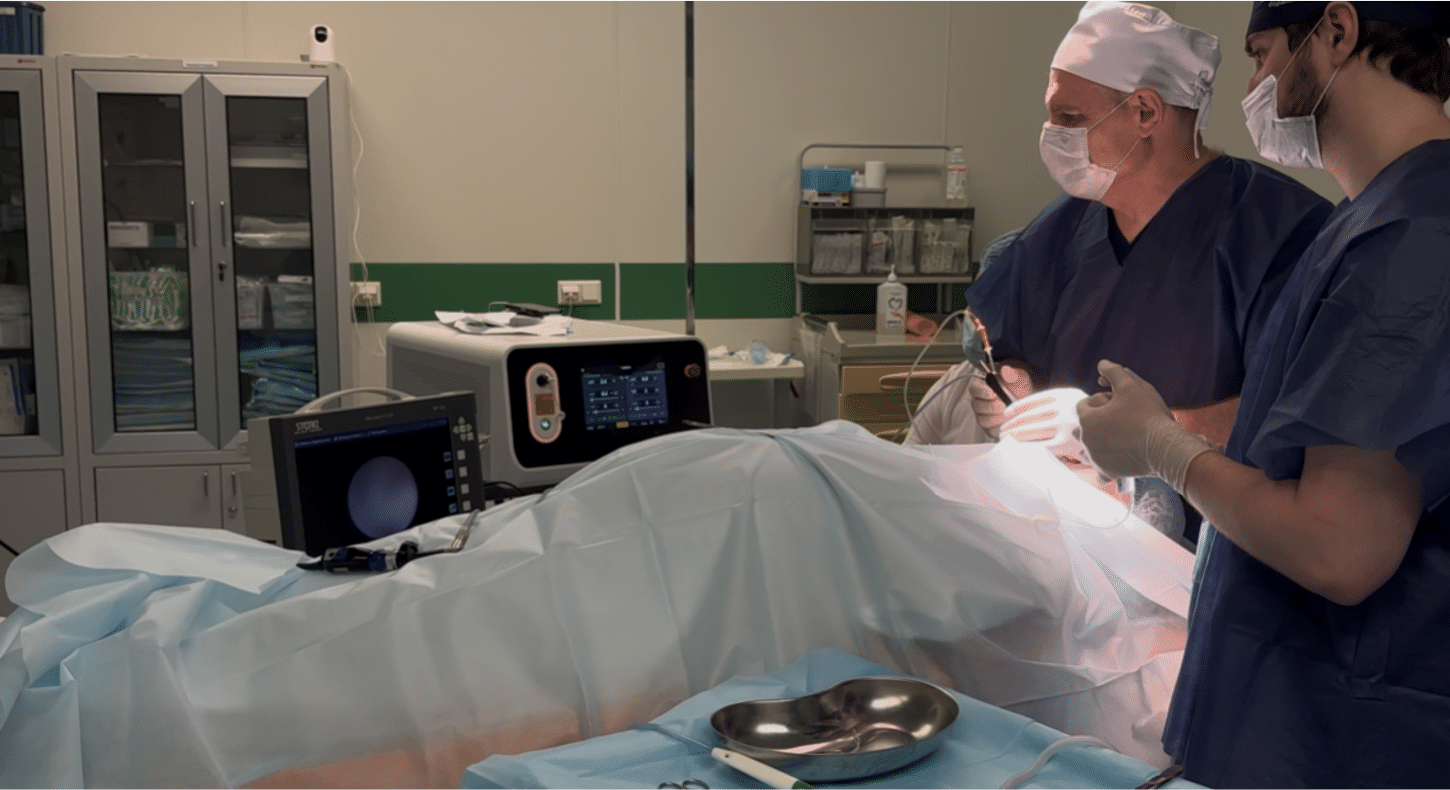
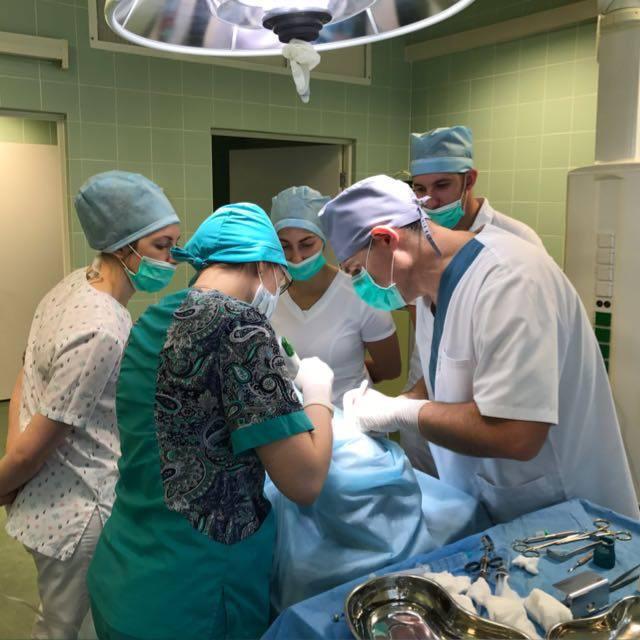
Magomed Rasulovich Abdusalamov performs transoral surgical removal of salivary gland stones. He also uses other methods to treat sialolithiasis. When choosing an approach, he first considers options that preserve the gland. The aim is to remove the stone while keeping the gland and its function intact.
Transoral surgical access is used when a stone can’t be removed whole through the duct. For example, it may be too large or firmly fixed to the duct wall. The choice of method is made after an examination and workup. The doctor assesses the stone’s size and position. He also checks the condition of the duct and gland, and whether inflammation is present.
At the consultation, the doctor explains why transoral surgical removal suits this case. He also describes the alternatives to it. In addition, he explains what to expect during recovery.
Recovery After Surgery
In the first 24 hours after surgery, mild pain and swelling are possible. This is an expected tissue response to the procedure. Sutures, if placed, usually dissolve on their own. They don’t need to be removed.
- a gentle diet — soft food that isn’t hot or spicy
- mouth rinses as prescribed by the doctor
- careful oral hygiene, avoiding the treated area
- a follow-up exam a few days after surgery
Full healing of the mucosa usually takes one to two weeks. However, patients resume normal activity and speech almost right away. The doctor gives exact timelines and dietary recommendations individually.
Possible Complications
Like any procedure, transoral surgical stone removal can cause adverse effects. However, they occur infrequently with this approach.
- temporary swelling and pain in the floor of the mouth
- brief numbness of the tongue or tissue near the wound
- narrowing of the duct at the incision site during healing
- inflammation of the wound or duct
- a new stone forming in the same gland
If swelling increases, a fever develops, or pus appears, contact a doctor right away.
How to Prepare for Surgery
Workup
Complete the prescribed sialography, ultrasound, or CT scan.
Medications
Tell the doctor about all medications you’re taking, especially blood thinners.
Allergies
Let the doctor know about any allergy to anesthetics.
When to Book a Consultation
It’s worth seeing a doctor as soon as symptoms start recurring. Typical signs are pain and swelling during meals. They appear under the tongue or around the submandibular gland. Don’t put off a visit if:
- swelling of the floor of the mouth doesn’t go away or is getting worse
- pain is getting worse or is making it hard to eat and speak
- there’s a taste of pus in the mouth
- you’ve developed a fever
Rapidly increasing swelling, a high fever, or difficulty swallowing call for urgent medical attention.
What the Cost of Surgery Depends On
An exact price can’t be quoted without an examination. The price depends on the size and position of the stone. It also depends on how difficult access is. The extent of the workup and the type of anesthesia matter too. Check in advance what the price includes. Ask about diagnostics, the surgery itself, anesthesia, and the follow-up exam. The doctor provides the treatment plan and final cost after the consultation and workup.
Key Facts About Transoral Surgical Removal of a Salivary Stone
- used for large stones that can’t be removed through the duct whole
- access is made from inside the mouth, with no incisions on the face or neck
- the surgery is performed under local anesthesia, on an outpatient basis
- the wound usually isn’t closed completely, to keep saliva draining
- mucosal healing takes one to two weeks
- the exact method and cost are determined after examination and workup
Frequently Asked Questions
Anesthesia and the Procedure
Local anesthesia is used during the procedure, so the patient doesn’t feel pain. However, they may notice pressure and the touch of instruments. Once the anesthetic wears off, moderate soreness is possible.
In most cases, no. The surgery is performed under local anesthesia. The doctor considers general anesthesia separately. For example, it may be used for significant anxiety or coexisting medical conditions.
The incision is made inside the mouth, on the mucosa. Therefore, no visible scars remain on the face or neck. If sutures are placed, they usually dissolve on their own.
It usually takes 20 to 40 minutes. The exact time depends on the size and depth of the stone.
With simple removal, the stone lies right at the duct opening. It is removed without cutting the mucosa. Transoral surgical removal is used when the stone is located deeper.
Recovery, Results, and Preparation
Yes. The procedure is performed on an outpatient basis. The patient goes home the same day.
Mucosal healing usually takes one to two weeks. However, patients resume normal activity and speech almost right after the surgery.
It’s possible. The risk depends on the cause of the stone and the condition of the gland. The doctor determines follow-up monitoring individually.
Removing the stone while preserving the gland and duct is the goal. After an examination and workup, the doctor decides how feasible this is.
Bring any test results you already have, such as sialography, ultrasound, or CT. Also bring a list of the medications you’re taking.
Need to Have a Large Stone Removed Transorally?
Book a consultation, and the doctor will examine the gland. He will determine the size and position of the stone. Then he will choose a treatment approach that preserves the gland whenever possible.